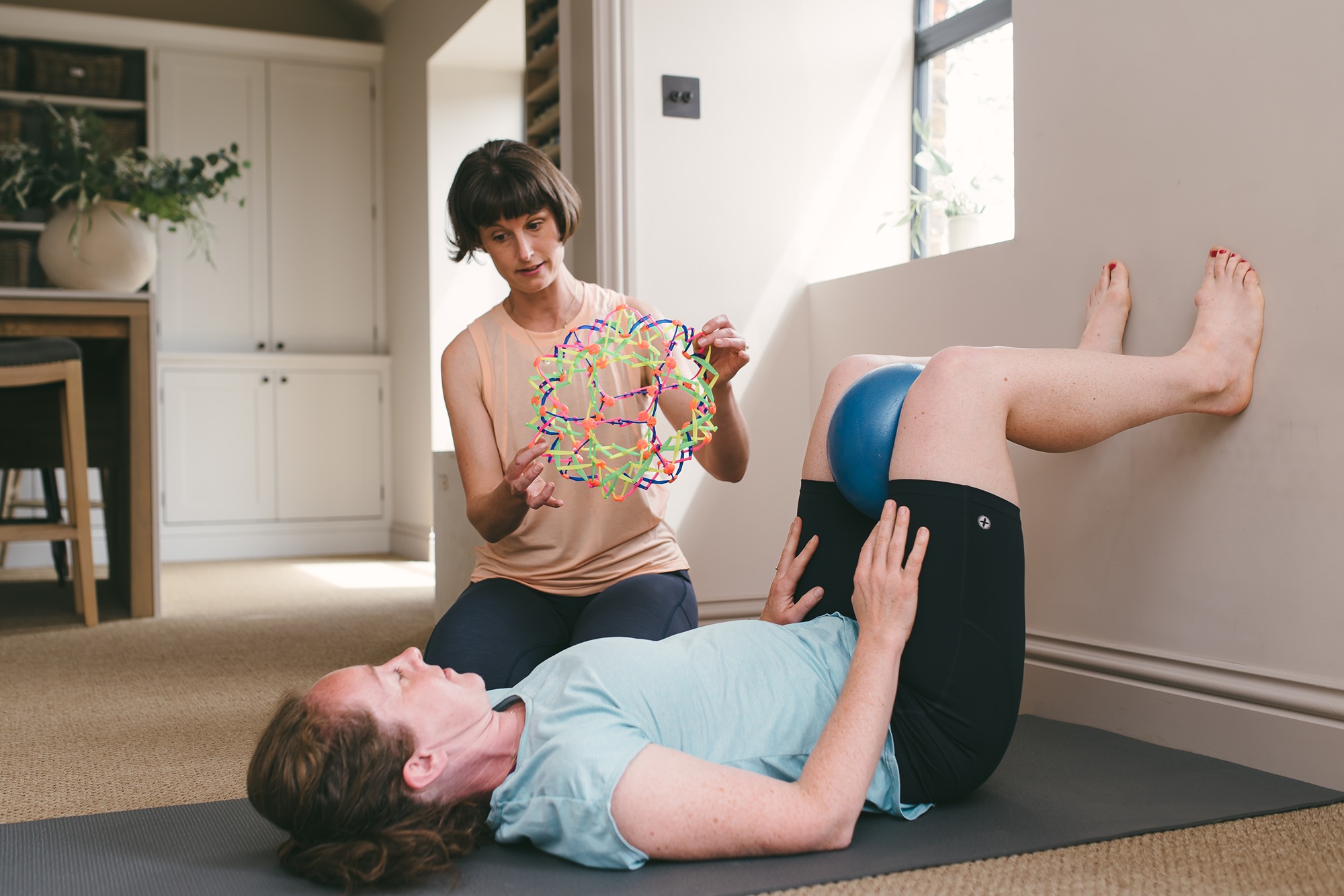
Pelvic Floor Exercise Coaching for Women in Berkhamsted & Online
Using a whole-body, mechanics-based movement approach, SOMA supports women to move beyond traditional Kegel-focused strategies. Pelvic health is addressed through strength, coordination, and whole-body integration — helping the pelvic floor contribute to stability, force absorption, and confident movement.
Through progressive training, many women experience improved control, reduced leakage, and better management of symptoms associated with pelvic organ prolapse.

Pelvic Floor Function and Women’s Health
The pelvic floor can become symptomatic at different stages of a woman’s life — particularly during pregnancy, birth, postpartum recovery, and during hormonal changes in perimenopause and menopause. These transitions can influence how the pelvic floor responds to load, pressure, and everyday movement, sometimes leading to symptoms such as leakage, discomfort, or feelings of heaviness.
Rather than viewing the pelvic floor in isolation, SOMA approaches pelvic health through whole-body movement, strength, and coordination.
Why the Pelvic Floor Matters
The pelvic floor forms the base of the core system and plays an important role in how the body moves and manages load. It contributes to the ability to:
absorb force
produce force
respond dynamically to both conscious and subconscious demands
When the pelvic floor is well-supported through appropriate movement and progressive training, it can adapt to daily life, exercise, and changing physical demands with greater ease and confidence.
How Pelvic Floor Coaching Works
At SOMA, pelvic floor corrective exercise coaching focuses on managing and distributing pressure effectively. This approach includes:
Breathing mechanics – learning to coordinate your breath with movement
Rib mobility – ensuring your torso moves freely
Core strength – building a strong, supportive core
Pelvic floor coordination – creating cohesive muscle patterns for better control
Whole-Body Integration
Effective pelvic floor function relies on the entire lower body and core working together. Coaching also considers:
Hip mobility and positioning
Pelvic and pelvic floor mobility
Pelvic stability and strength
By layering awareness, mobility, and strength, you regain control over your movement patterns and your pelvic floor symptoms — whether that’s bladder leaks or pelvic organ prolapse.