
Hip and Pelvic Pain Coaching in Berkhamsted & Online Move Better. Build Strength. Reduce Pain.
Movement skills, mobility, muscle balance, and posture all play a key role in hip and pelvis pain — from sacro-iliac joint pain, pubic symphysis discomfort and pinching hips to deep, persistent glute pain or that dull ache after a run.
SOMA addresses these issues through a whole-body movement approach, carefully balancing mobility and strength to improve how your body absorbs, produces, and transfers force.
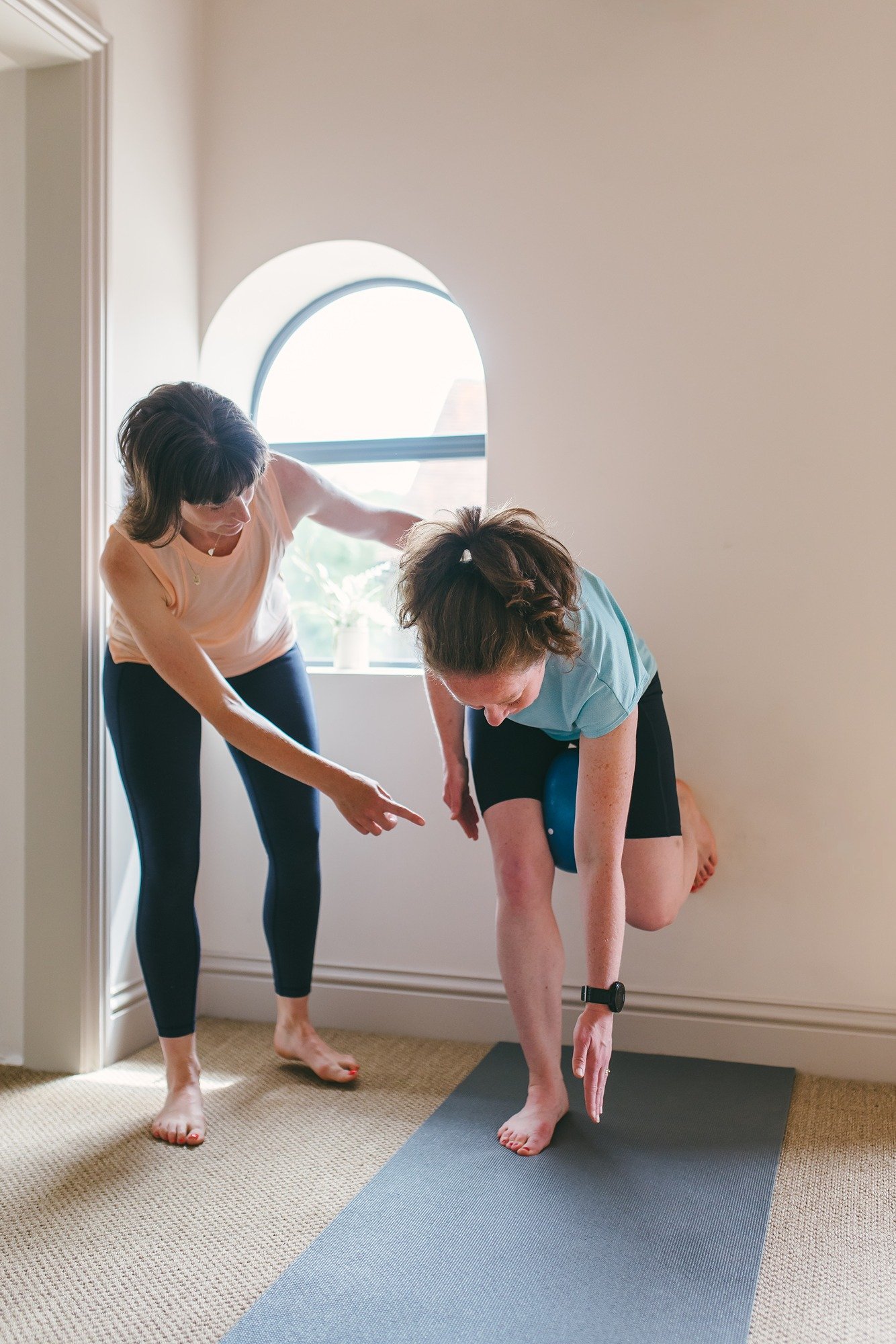
Exercise and Movement coaching for hip and pelvis pain
Women commonly experience hip and pelvic pain, often due to changing biomechanics during pregnancy, the postnatal period, and natural shifts in movement patterns, muscle capacity, and joint range of motion throughout life.
These life stages can influence joint positioning, muscular coordination, load tolerance, and how force is transferred through the body. Over time, this can contribute to discomfort, stiffness, feelings of instability, or persistent pain that doesn’t fully settle on its own.
Improving comfort and confidence in hip and pelvic movement is rarely about strengthening one muscle in isolation. Hip and pelvic health is influenced by joint mobility, pelvic orientation, muscular coordination, and overall movement strategies. When capacity in one area is limited, the body often adapts elsewhere — sometimes increasing stress through surrounding tissues and joints.
Hip and pelvic pain is also closely connected to how you breathe, how your rib cage moves, and how your feet interact with the ground. Breathing mechanics influence core and pelvic floor coordination, rib cage movement affects spinal and pelvic positioning, and foot mechanics play an important role in how force travels through the hips and pelvis during everyday movement and exercise.
At SOMA, every journey begins with a detailed consultation and movement assessment. This helps us understand your individual history, symptoms, and current movement strategies. From there, training is carefully tailored using thoughtful, progressive exercise — designed to build capacity, improve coordination, and support more confident, comfortable movement over time.
SOMA supports women in reconnecting with their bodies, rebuilding trust in movement, and recognising that hip and pelvic pain is not something you simply have to accept as part of pregnancy, motherhood, or hormonal change.